Published on: 15 October 2026
Babies have 20 baby teeth, also called milk teeth, primary teeth or deciduous teeth because they are shed. The first ones, usually the lower front teeth, come in between 4 and 12 months of age, and most children have all 20 by about age three. Baby teeth start to fall out around age six, in roughly the same order they came in, and the last ones are usually gone by age 12. Timing varies from child to child, so a few months early or late is usually normal.
Key Takeaways
- Children typically develop a full set of 20 primary teeth between six months and three years of age.
- Teeth usually erupt in pairs, starting with the lower front teeth before progressing to the back molars.
- The shedding process generally begins around age six as permanent teeth emerge.
- Symptoms like high fever or diarrhea are not standard signs of teething and warrant assessment by a medical doctor.
- Dental professionals recommend a child’s first dental visit by their first birthday or within six months of their first tooth erupting.
Baby Teeth Chart: When Each Tooth Comes In and Falls Out
Referencing a primary tooth timeline helps parents understand what to expect as their child grows. Baby teeth usually come in between about 6 months and 3 years of age and fall out between about 6 and 12 years, with the lower central incisors usually coming in first in both cases. The ages below are typical ranges, not deadlines.
| Tooth Type | Upper Eruption / Shedding | Lower Eruption / Shedding |
| Central Incisor | 8-12 months / 6-7 years | 6-10 months / 6-7 years |
| Lateral Incisor | 9-13 months / 7-8 years | 10-16 months / 7-8 years |
| Canine (Cuspid) | 16-22 months / 10-12 years | 17-23 months / 9-12 years |
| First Molar | 13-19 months / 9-11 years | 14-18 months / 9-11 years |
| Second Molar | 25-33 months / 10-12 years | 23-31 months / 10-12 years |
How many baby teeth do children have?
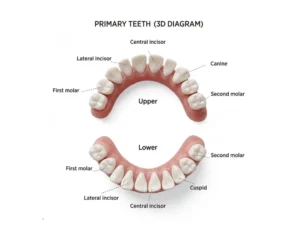
Children develop 20 primary teeth in total, with 10 teeth in the upper arch and 10 in the lower arch. This complete set consists of four central incisors, four lateral incisors, four canines, and eight primary molars. Although temporary, these teeth hold essential space in the jaw bone structure to guide the proper placement of adult teeth.
What order do baby teeth come in?
Primary teeth usually emerge in matching pairs on the left and right sides. Lower central incisors generally erupt first between 6 and 10 months of age. Upper central incisors emerge next, followed by lateral incisors. First primary molars typically appear around 14 months, canines follow near 18 months, and second primary molars complete the set between about 2 and 3 years.
Is It Normal for Baby Teeth to Come In Late or Out of Order?
Minor variations in tooth eruption timing or sequence are common and typically do not indicate any underlying health concerns for growing children.
What if my baby has no teeth by 12 months?
Delayed tooth eruption is relatively common. While primary teeth begin appearing around six months on average, some healthy infants may not develop their first tooth until 12 to 15 months of age. Genetics often plays a role, so a family history of late teething may explain a slower timeline. However, a routine checkup with a dentist allows for an evaluation to confirm normal development and rule out underlying issues.
What signs mean you should get your child’s teeth checked?
You may want to schedule a consultation if no teeth have erupted by 18 months of age. Other reasons to seek professional advice include tooth eruption patterns that interfere with feeding, visible discoloration on new enamel, or signs of significant discomfort. Early evaluations help establish good oral health habits and allow clinicians to monitor primary tooth development effectively.
Teething Signs and How to Ease Discomfort
Teething can lead to localised gum tenderness, mild irritability, and increased drooling. Common baby teething signs include sore, swollen gums, extra drooling, chewing on fingers or toys, and broken sleep. For a detailed guide on what to expect during this stage, read our article on baby teething signs.
According to the Health Promotion Board, teething is not often tied to fever or diarrhoea, so take your baby to a doctor if either appears.
How can you soothe a teething baby safely?
Rub your baby’s gums gently with a clean finger or a cold, clean washcloth, or offer a chilled (not frozen) teething ring. The Health Promotion Board advises against over-the-counter teething gels, and teething necklaces carry a risk of choking and strangulation. Ask your paediatrician before giving any pain medicine.
Which baby teeth hurt the most?
Many babies seem more uncomfortable when the molars come through, roughly between 13 and 33 months. Every baby reacts differently, so a calm molar stage is normal too.
When Do Baby Teeth Fall Out?
Baby teeth usually start falling out around age 6 and finish by about age 12, in roughly the order they came in: central incisors at 6 to 7 years, lateral incisors at 7 to 8, first molars at 9 to 11, canines at 9 to 12, and second molars at 10 to 12. The timing and order can vary between children. As permanent teeth develop, they trigger the gradual resorption of the roots of the baby teeth, allowing them to loosen and eventually fall out.
Why is an adult tooth coming in behind my child’s baby teeth?
This condition occurs when a permanent tooth emerges before the baby tooth drops out. It frequently affects lower front teeth. Often, normal tongue movement gradually pushes the permanent tooth forward into proper alignment as the baby tooth naturally loosens. If the baby tooth does not loosen after a few months, a dentist can evaluate it and assist with safe removal.
Why Do Baby Teeth Matter if They Fall Out Anyway?
Primary teeth hold space for the adult teeth that replace them, and they help your child chew and speak. If a baby tooth is lost early through decay or injury, nearby teeth can drift into the gap, which may leave less room for the adult tooth. A 2020 systematic review on early loss of baby front teeth found it may affect how children pronounce some sounds.
How to Care for Your Child’s Baby Teeth
Proper oral care starts early by wiping infant gums and transitioning to fluoride toothpaste as soon as the first tooth emerges.
When should you start brushing your baby’s teeth?
Wipe your infant’s gums with a damp, clean cloth after feeding, even before teeth appear. As soon as that first milk tooth pops through, start using a small, soft-bristled toothbrush twice daily.
How much fluoride toothpaste should a child use?
For children under three years, use a tiny smear of fluoride toothpaste (about the size of a grain of rice). For children aged three to six, increase this to a pea-sized amount. Ensure they spit out excess paste rather than swallowing it.
When to Book Your Child’s First Dental Check-Up
Scheduling a dental visit by age one helps monitor oral development early and establishes positive, stress-free dental habits.
What happens at a child’s first dental visit?
The first visit is gentle and quick. A dentist inspects the jaw, gums, and existing teeth while sitting comfortably with the parent. It is an ideal time to discuss feeding habits, cleaning tips, and teething concerns in a relaxed environment.
To keep your child’s smile healthy, book your child’s dental check-up today.