Published Date: 31 August 2023
Last updated: 13 August 2026
Written By: Dr. Khor Guan Chiang
Tartar is hardened plaque. Once it sets, brushing and flossing will not shift it, and no home remedy will either. It has to be taken off by a dentist or hygienist. This page covers how to tell whether you have it, what it does to your gums, and what removal involves in Singapore.
What is tartar?
Tartar is plaque that has mineralised. Plaque is the soft bacterial film that forms on teeth within hours of brushing. Left in place, minerals in your saliva harden it into a rough deposit bonded to the tooth surface. The clinical name is dental calculus.
The distinction decides what you can do about it.
| Plaque | Tartar | |
|---|---|---|
| Texture | Soft, sticky film | Hard, crusty deposit |
| Colour | Colourless to pale yellow | Yellow, brown or black |
| Forms within | Hours | Days to weeks |
| Removed by | Brushing and flossing | A dentist or hygienist only |
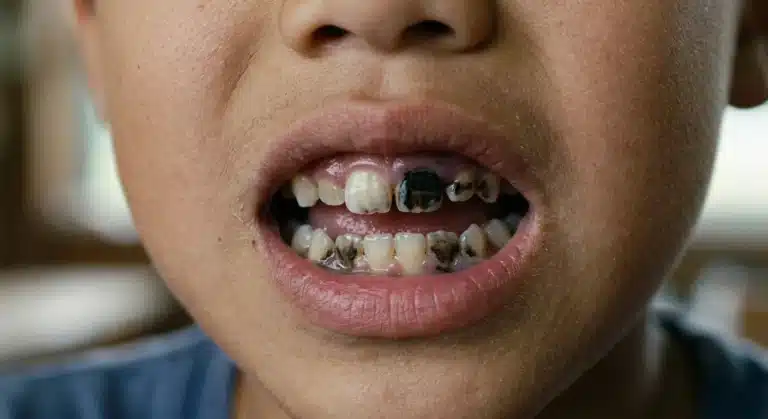
Why do I have black tartar on my teeth?
Tartar takes on the colour of whatever passes over it. Coffee, tea, red wine and tobacco stain it from yellow through brown to near-black over time.
There is a second cause people miss. Tartar sitting below the gumline irritates the gum and makes it bleed, and blood worked into the deposit darkens it. Black tartar along the gum margin is often a sign the deposit has already spread under the gum, where you can neither see nor reach it.
Either way, do not try to scrape it off yourself.
What causes tartar to build up?
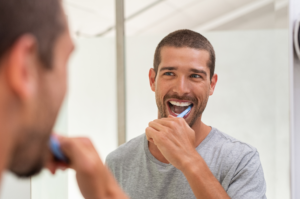
Plaque left undisturbed for a day or so begins to harden. How fast varies from person to person:
- Brushing and flossing habits. Missed surfaces do the damage, usually the inner face of the lower front teeth and the outer face of the upper molars, both sitting next to salivary gland openings.
- Saliva composition. Some people mineralise plaque faster than others at the same standard of brushing. This is not a hygiene failing.
- Smoking and tobacco. Increases both the rate of buildup and the staining.
- Diet. Sugary and starchy food feeds plaque bacteria. Acidic food and drink roughens enamel, giving deposits more to grip.
- Braces, crowded teeth and dry mouth. All leave surfaces that are difficult to clean properly.
What does tartar do to your teeth and gums?

Tartar is porous and rough, so it holds fresh plaque against both the tooth and the gum. Three things follow from that:
- Gum inflammation. Red, swollen or bleeding gums, the early stage of gum disease. Caught here, it can usually be reversed.
- Bad breath. Bacteria trapped in the deposit release sulphur compounds.
- Gum recession and sensitivity. As inflammation continues the gum pulls back from the tooth, and exposed root surfaces react sharply to hot and cold.
Untreated, early gum disease can progress to periodontitis, where the bone holding the tooth is lost. Bone loss does not come back.
How common is gum disease in Singapore?
More common than most people assume.
Singapore’s 2019 National Adult Oral Health Survey found that more than three in four adults aged 21 to 64 had some form of periodontal disease. The same survey found that six in ten people eligible for government dental subsidies were not using them.
Source: National Dental Centre Singapore
Two things follow. Bleeding gums here are closer to the norm than the exception, so they are not a reason to feel singled out. And a large share of people paying full price for dental care do not need to be.
How is tartar removed?
A dentist or hygienist removes tartar during a scale and polish. An ultrasonic scaler vibrates the deposit off the tooth while a water spray flushes it clear, then hand instruments clear what it leaves. Polishing smooths the surface afterwards, which slows how quickly new plaque attaches.
Deposits below the gumline need root planing, which cleans the root surface inside the gum pocket. That is gum treatment rather than a routine clean, and your dentist will say whether it applies to you.
For what this costs in Singapore, including what CHAS covers, see the dental price list.
If you are due for a clean, WeSmile Essentials covers scaling and polishing, fluoride treatment and full mouth X-rays at $98 nett.
Can you remove tartar at home?
No. Once plaque has hardened into tartar, nothing you do at home will remove it. What home care does is stop new tartar forming:
- Brush twice a day for two minutes with a fluoride toothpaste. Tartar-control toothpastes contain pyrophosphates, which slow crystal formation. They prevent buildup, they do not remove it.
- Clean between the teeth daily, with floss or interdental brushes.
- Reduce smoking and frequent snacking.
Two things to avoid. Do not use a metal pick or scaler bought online, the risk of gouging enamel and cutting the gum is real. And oil pulling is not a substitute for cleaning, the American Dental Association does not recommend it, citing a lack of supporting evidence.
FAQs
Does removing tartar hurt?
Most routine scale and polish appointments are done without anaesthetic. If your gums are already inflamed, or the deposit sits deep below the gumline, the area can be tender and your dentist can numb it. Say so beforehand if you are worried.
Can baking soda remove tartar?

No. Baking soda is mildly abrasive and can lift soft plaque and surface stain, which is why it appears in some toothpastes. It cannot break the bond between hardened tartar and enamel. Used heavily it wears enamel down.
How often should tartar be removed?
Every six months for most adults. People who form tartar quickly, smoke, wear braces or have a history of gum disease are often advised to come in every three to four months.
Is tartar buildup different in children?
The process is the same. Children usually accumulate less because diet and brushing are supervised, but a child who brushes poorly or wears braces builds tartar as readily as an adult.
Why does tartar break off on its own?
It usually happens while eating something hard. What is left has a rough or sharp edge, and the gum underneath is often already inflamed. Leave it alone and book a clean.
Bottom line
Tartar is where oral hygiene stops being a home job. Brushing and flossing prevent it; a dentist removes it. If your gums bleed when you brush, or you can see a hard yellow or dark rim along the gumline, a professional clean is the standard first step.
Book an appointment at our Ang Mo Kio, Bedok or Orchard clinic.