
Published on: 18 September 2026
Teething is one of the most talked-about milestones in a baby’s first year, usually starting around six months of age. It also causes plenty of parental worry, especially when a fever shows up alongside those first swollen gums. This guide separates genuine teething signs from symptoms that need a paediatrician’s attention, so your child gets the right care at the right time, alongside routine paediatric dental care.
Key Takeaways
- Teething causes only a mild, short-lived fever (37.5 to 38.5°C), drooling, swollen gums and cheek rubbing, never a high fever or true illness.
- Call your paediatrician if fever tops 38.5°C, lasts more than a day or two, reaches 39°C, or your baby is under three months old.
- Severe diarrhoea, ear infections and widespread rash are not caused by teething and need a separate medical check.
- Safe relief includes chilled (not frozen) teething rings and gentle gum massage; skip amber necklaces and benzocaine gels.
- Book your baby’s first dental visit around their first birthday, or as soon as the first tooth appears.
Does Teething Cause a High Fever?
No. Teething causes only a mild, short-lived temperature rise of about 37.5 to 38.5°C, driven by increased drooling and localised gum inflammation rather than infection. A prospective study of 125 infants published in Pediatrics found no link between teething and fevers above 38.5°C. Anything higher usually points to a separate cause that needs checking.
Call your paediatrician if:
- Fever climbs above 38.5°C, or any fever lasts more than a day or two
- Temperature reaches 39°C at any point
- Fever comes with laboured breathing or unusual lethargy
- Your baby is under three months old and has any fever at all, which always warrants same-day medical review
In Singapore’s warm, humid climate, keep a feverish baby cool and well hydrated rather than assuming a high reading is “just teething”.
Typical Teething Signs to Expect
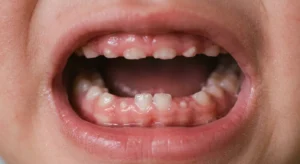
Genuine teething signs tend to appear two to three months before a tooth actually breaks through the gum. Look out for:
- Swollen, tender gums around the erupting tooth
- Excess drooling, which can irritate the skin
- Constant chewing on fists, toys or fingers
- Cheek rubbing or ear pulling, from pain referred through the jaw (not an ear infection)
- A mild rash around the mouth and chin
- A slight dip in appetite and some disrupted sleep
Can Teething Cause Diarrhoea or Ear Infections?
No. Loose stools, true diarrhoea and ear infections are not caused by teething, even though babies often tug at their ears from referred gum pain. The same Pediatrics cohort study, together with a later meta-analysis of teething symptoms, found that teething is linked only to mild, local signs, not gastrointestinal or ear illness.
If your baby has more than six loose, watery stools a day, stools containing mucus or blood, or ear pulling alongside fever or persistent fussiness, treat it as a separate illness, such as gastroenteritis or an ear infection, and see your paediatrician rather than waiting for teething to pass.
Teething Rash and Drool Rash: Causes and Care
Drool rash is the most common rash linked to teething. Extra saliva irritates the delicate skin on the chin, neck and chest, causing red, mildly inflamed patches. It is harmless and usually settles once drooling decreases, typically after six months.
To manage it:
- Wipe drool from the face and neck often throughout the day
- Apply a barrier cream such as lanolin, aquaphor or zinc oxide
- Use cotton bibs instead of plastic, and change them as soon as they are damp
- Pat the skin dry rather than rubbing it
The extra saliva your baby swallows can also make stools more acidic, which raises the risk of diaper rash. Frequent nappy changes, barrier cream and some nappy-free air time help prevent this.
See your dentist or doctor if the rash spreads beyond the mouth, chin and neck, shows pus, crusting or worsening redness, or does not improve after five to seven days of consistent barrier cream care. A rash on the trunk or limbs is unlikely to be drool-related; a 2025 review of viral exanthems in children notes that such widespread rashes usually point to a separate viral illness and should be assessed by a doctor.
When Do Babies Start Teething?
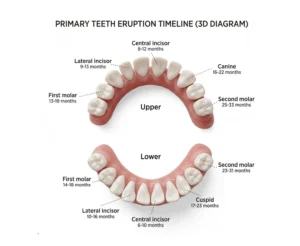
According to the American Academy of Pediatric Dentistry, teething typically begins between four and twelve months, with six months being the average. The usual eruption order is:
- Lower and upper central incisors (around six to ten months)
- Lateral incisors (around nine to sixteen months)
- First molars (around thirteen to nineteen months)
- Canines (around sixteen to twenty-three months)
- Second molars (around twenty-three to thirty-three months)
Most children have a full set of 20 primary teeth by around two and a half to three years old. Some babies start as early as three months and others closer to fourteen months; both extremes are normal. Genetics play a role, and for premature babies, teething timing is best tracked from corrected age rather than birth date until around age three.
Safe Teething Relief: What Helps and What to Avoid
What helps:
- Chilled, food-grade silicone teething rings (chilled in the fridge, not the freezer)
- A clean, damp cloth cooled in the fridge, used under supervision
- Gentle finger massage of the gums for one to two minutes
- FDA-cleared hydrogel teething pads, chilled rather than frozen
What to avoid:
- Amber teething necklaces or bracelets: no evidence they relieve pain, and they carry a real choking and strangulation risk
- Teething gels containing benzocaine: the FDA has warned these carry a risk of methemoglobinaemia, a serious blood disorder
- Frozen (rather than simply chilled) teethers, which can injure sensitive gums
If discomfort is affecting sleep or feeding, paracetamol or ibuprofen dosed correctly for your baby’s age and weight can help. Check with your paediatrician on dosing and use it only for as long as needed.
When Should I Take My Baby to the Dentist for the First Time?
Book your baby’s first dental visit by their first birthday, or as soon as the first tooth appears, whichever comes first. This lets your dentist track eruption progress, catch any developmental concerns early, and show you age-appropriate cleaning techniques.
Before teeth appear, gently wipe your baby’s gums with a clean, damp cloth after feeds. Once the first tooth erupts, switch to gentle brushing with a soft, small toothbrush and water, using a fluoride-free toothpaste for children under two unless your dentist advises otherwise.
Ensure Your Baby’s Healthy Smile From the Start
Most teething passes with nothing more than a little extra cuddling and a cold teething ring. But when something feels off, trust your instincts and get it checked. Our dentistry team is here to guide you through every stage of your baby’s smile, from that very first tooth to a confident, healthy set. Schedule Your Baby’s First Dental Visit at WeSmile Dental.