
Choosing how to fix a chipped or discoloured tooth can feel overwhelming. While composite bonding and composite veneers both use a flexible, tooth-coloured resin, they fix completely different issues. Whether you want to fix a single small crack or overhaul your entire smile, understanding how these options stack up in terms of cost, longevity, and treatment time will help you pick the right path before you head in for a clinical consultation.
Understand the Difference Between Composite Bonding and Dental Veneers in Singapore
To put it simply, think of bonding as a spot repair, while a veneer is a full surface remodel. Both procedures use the exact same material, a specialised dental resin, but the application method changes depending on your goals.
| Feature | Composite Bonding | Composite Veneers |
|---|---|---|
| Coverage | Targets specific spots (edges, gaps) | Covers the entire front surface |
| Enamel Prep | Zero enamel removal | Minimal to no shaving required |
| Treatment Time | 30 to 60 minutes per tooth | 1 to 2 hours for a full set |
| Primary Use | Repairing minor chips and small gaps | Shifting shape, alignment, or deep shade |
What is Composite Bonding and How Does It Work?
Composite bonding Singapore is a straightforward, single-visit solution designed for quick treatment. Your dentist applies the pliable resin directly onto a specific problem area, like a tiny chip from a stray olive pit or a minor gap between your front teeth. Because it only patches the structural defect, the dentist does not need to shave down your natural enamel. They simply roughen the tooth surface slightly with a mild conditioning gel, mould the resin to match your natural tooth contours, and harden it using a specialised curing light.
How Composite Veneers Transform Your Smile
When you want a more comprehensive change, composite veneers cover the entire front face of the tooth. This full-surface treatment acts like a shell to mask deep internal discolouration, align slightly crowded teeth, or reshape multiple teeth for a cohesive smile makeover Singapore. While bonding leaves most of your natural enamel exposed to the open air, a veneer fully hides it. To ensure the resin does not look bulky or unnatural, a practitioner may suggest gently prepping the tooth by removing a micro-layer of enamel, though some cases require zero preparation at all.
Porcelain vs Composite Veneer: A Quick Material Comparison
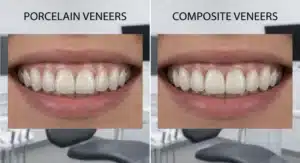
Porcelain remains the premium benchmark in aesthetic dentistry. While composite is fast and friendly on the wallet, porcelain offers a glassy translucency that mimics natural teeth perfectly. Porcelain is highly resistant to surface stains and tends to last 10 to 15 years. Composite, on the other hand, is a more porous resin material, meaning it is prone to dulling over time. However, composite holds a distinct advantage: if you chip a composite veneer, your dentist can usually patch it up in minutes, whereas a broken porcelain veneer requires a total replacement from an external dental laboratory.
Composite Bonding vs Veneers: Costs in Singapore
Private dental fees in Singapore reflect the complexity of the treatment, materials used, and the clinical time required to sculpt the resin.
Cosmetic dental treatments vary in price across local clinics. Generally, simple spot fixes cost less because they take up less time in the chair and use minimal material. Full coverage options require more meticulous shaping and layering, which drives up the overall investment.
How Much Does Composite Bonding Cost in Singapore?
In Singapore, the cost of composite bonding generally ranges from S$218 to S$800+ per tooth. Your final bill depends mostly on the size of the chip or gap and how difficult it is to match the resin to your natural tooth gradient. A tiny edge repair on a lower incisor sits at the lower end of the spectrum, while rebuilding a fractured corner of a prominent front tooth demands more time, layering, and skill, pushing the fee upward.
The Cost of Composite Veneers vs. Premium Porcelain Options
Composite veneers usually cost between S$300 and S$1,200+ per tooth. Contrast this with premium porcelain veneers, which typically run from S$1,200 to S$2,700+ per tooth due to laboratory fabrication fees. Choosing composite gives you immediate upfront savings, making it an attractive choice if you want to refresh your smile without a heavy financial layout. However, you do have to weigh this against the reality that composite requires more frequent maintenance and replacement down the road.
Long-term Value: Factoring in Maintenance and Replacements
Composite wears down quicker than porcelain, meaning you’ll need to factor in occasional touch-ups or repairs. We break down these long-term financial considerations in our Singapore aesthetic dentistry cost guide. While CHAS and Medisave do not cover purely cosmetic work, you may qualify for subsidies if structural bonding is needed to repair a painful, damaged tooth.
Which Treatment Suits Your Smile Goals?
Your bite layout, the extent of your tooth damage, and what you want to achieve visually will dictate which clinical option makes sense.
Every mouth is unique, and what works for a friend might not work for you. A thorough clinical assessment is necessary to check that your teeth are fundamentally healthy before any cosmetic resin touches them.
Candidates for Composite Bonding (Minor Corrections)
Bonding is well-suited for people who are generally happy with their smile but have one or two minor imperfections.
- Fixing a single chipped tooth from an accident.
- Closing a small midline diastema (the gap between front teeth).
- Correcting minor asymmetrical contours on an otherwise straight smile.
- Preserving 100% of your natural, underlying tooth structure.
When Composite or Porcelain Veneers are the Ideal Choice
Veneers are more appropriate when you want a uniform transformation across your entire smile zone.
- Masking stubborn, deep discolouration like tetracycline antibiotic stains that whitening cannot fix.
- Lengthening multiple short, worn-down teeth caused by aging.
- Masking minor misalignment or crowding without undergoing years of orthodontic braces.
- Creating a consistent, bright shade across six to eight top teeth.
Underlying Dental Issues: When Crowns or Root Canals Are Needed First
Neither bonding nor veneers will work if a tooth is structurally compromised or severely decayed. If a tooth has a deep cavity that has reached the nerve, placing a thin layer of cosmetic resin on top is like painting over cracked plaster. The tooth will likely require a root canal to clear the infection and a full, protective dental crown to stop it from splitting apart. You can read more about managing these deeper structural issues and associated fees on our resource page covering root canal treatment cost Singapore subsidy.
Longevity, Maintenance, and Potential Risks
Managing expectations about how resin behaves over time helps prevent surprises and protects your cosmetic investment.
No dental restoration lasts forever. Being realistic about the physical limitations of composite resin ensures you can keep your new smile looking bright and intact for as long as possible.
Managing Staining: Composite Resin vs. Porcelain
Composite resin is slightly porous on a microscopic level. Because of this, it appears prone to absorbing pigments from dark foods and drinks over time. If you drink a lot of black coffee, tea, or red wine, or if you smoke, your composite restorations will gradually lose their lustre. To keep them bright, you will need to practice meticulous oral hygiene at home and visit WeSmile Dental for regular professional polishing to buff away surface stains.
Lifespan Realities: How Long Do They Last?
On average, standard composite bonding lasts roughly 3 to 7 years. Composite veneers have a slightly longer lifespan, usually lasting around 5 to 7 years before they begin to show signs of wear, micro-chipping, or dullness. At that stage, they will need a clinical touch-up or a complete replacement. Your personal habits, like chewing ice or biting your nails, play a massive role in how quickly the material degrades.
Is the Procedure Reversible?
Because composite bonding does not require the dentist to alter your natural enamel, the procedure is entirely reversible. If you choose to remove the resin later, your tooth remains intact beneath it. Composite veneers are a bit different. If your dentist needs to shave away even a tiny fraction of enamel to prevent the veneer from looking bulky, that specific tooth loses its natural outer shield permanently. This means it will always require a veneer or a crown to stay protected.
Frequently Asked Questions
Are composite veneers better than composite bonding?
They are not inherently better, they simply serve different purposes. Veneers are a better choice for broad, multi-tooth aesthetic changes where you want to alter the overall color and shape of your smile. Bonding is faster, less invasive, and cheaper for fixing isolated, local issues like a single chipped tooth edge.
Does my celebrity smile inspiration mean I need veneers or crowns?
While famous, ultra-white smiles are often the result of porcelain veneers or crowns, recreating that look naturally requires a bespoke plan. Copying someone else’s teeth exactly can look artificial. A good dentist designs a smile that balances with your specific facial features, lip line, and skin tone.
Are there specific veneers recommended for bruxism?
Composite resin chips easily under the heavy, repetitive forces of night-time teeth grinding (bruxism). If you grind your teeth, high-strength porcelain veneers, such as E-max or Zirconia, are highly recommended instead. Your dentist will also custom-craft a protective night guard to prevent you from fracturing your new restorations while you sleep.
Why Choose WeSmile Dental for Your Smile Transformation?
We focus on conservative, patient-centred care to help you get a healthy, natural-looking smile.
Personalised Smile Artistry in Singapore
We believe that great cosmetic dentistry should look completely natural. Our experienced clinicians use high-grade composite resins that mimic the light-reflecting qualities of real enamel. By carefully blending shades and layering the material, we aim to deliver restorations that blend in with your surrounding teeth while resisting premature chipping and staining.
What to Expect During Your Smile Analysis
Your journey begins with a detailed smile analysis and a composite bonding Singapore consultation. During this assessment, we carry out a comprehensive examination of your overall oral health. We look closely at your bite alignment to check for hidden signs of bruxism that could threaten your new restorations. Once we understand your aesthetic goals, we provide a clear, transparent breakdown of your treatment options and the costs involved before any work begins.
Book Your Smile Transformation Today
Taking care of chipped or damaged teeth early helps prevent further structural breakdown, saving you from more complex and expensive treatments later on. If you want to find out whether composite bonding or composite veneers fit your lifestyle and budget, contact our team to schedule your personalised smile analysis.