Published: 23 March 2025
Last updated: 21 August 2026
Written by: Dr. Khor Guan Chiang
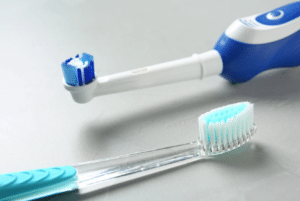
Electric and manual toothbrushes both work, provided you use good technique. The National Dental Centre Singapore (NDCS) has said there’s no significant difference between the two when used correctly. So the honest starting point is this: buy whichever one actually gets you brushing for two minutes, twice a day, without fail.
Where it does matter is technique, consistency and what happens after brushing. This guide covers the real cost difference in Singapore dollars, when an electric brush earns its higher price, and why neither one replaces a professional scaling and polishing.
How Did We Get From Manual to Electric Toothbrushes?
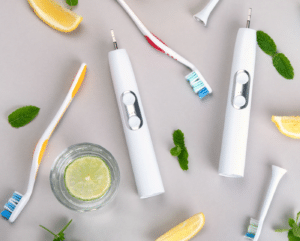
The manual toothbrush, a handle with bristles, has done the job for centuries. It’s cheap, portable and needs no charging, and changes over the years have mostly been about bristle texture and handle ergonomics.
Electric toothbrushes arrived later, introduced in the late 1930s, and have picked up oscillating or sonic movement, pressure sensors, built-in timers and, on some models, Bluetooth tracking. The technology aims to make good technique easier to maintain rather than to replace it.
Manual or Electric Toothbrush: Which One Actually Wins?
It depends what you’re optimising for. Here’s how they compare on the factors that actually matter:
| Feature | Manual Toothbrush | Electric Toothbrush |
|---|---|---|
| Effectiveness | Effective with proper technique | Easier to sustain proper technique, especially with a timer |
| Cost | From around SGD 1 to SGD 12 per brush | SGD 42 to SGD 499 depending on the model |
| Accessibility | No charging needed, replace anytime | Needs charging or battery replacement |
| Ease of use | Technique-dependent, needs manual dexterity | Easier for limited hand mobility (e.g. arthritis) |
| Portability | Lightweight, travel-friendly | Bulkier, needs a charger |
| Environmental impact | Less e-waste, biodegradable options exist | Adds to e-waste, needs proper disposal |
“There is no significant difference between a manual toothbrush and an electric toothbrush, and both are equally effective if used correctly.” Source: Ms Yap Xin Ying, Senior Oral Health Therapist, National Dental Centre Singapore, via HealthXchange (SingHealth)
What electric brushes add isn’t a superior brushing motion so much as built-in guardrails: a timer that stops you cutting brushing short, and on some models, a pressure sensor that pauses the motor if you’re pressing too hard. That second feature matters, because a hard-bristled brush used with too much force can wear down gum tissue and enamel over time.
If you’re prone to brushing hard, an electric brush with a pressure sensor, or simply switching to soft bristles, addresses the same problem two different ways.
Electric brushes also tend to help people with limited hand mobility, such as arthritis, and people with braces who need to manoeuvre around brackets and wires.
If you want to see how toothbrush spend compares against what professional treatment actually costs in Singapore, our full price list breaks down our fees by procedure.
How Do You Choose the Right Toothbrush for You?

A few questions narrow it down faster than reading another review:
- Do you have braces, or a dental condition that needs more careful cleaning? Electric brushes are generally easier to use around brackets and wires.
- Do you have limited hand mobility? Electric’s automated motion does more of the work.
- What’s your budget? Manual is cheaper upfront and has no ongoing running cost beyond replacement heads or brushes; electric costs more initially and needs replacement heads.
- Do you travel often or have unreliable access to charging? Manual is the more dependable option on the road.
- Does reducing electronic waste matter to you? Manual, particularly biodegradable models, produces less of it.
None of these questions have a wrong answer. They just point you toward which trade-offs you’re actually willing to live with.
Does Brushing Well Mean You Can Skip Professional Cleaning?
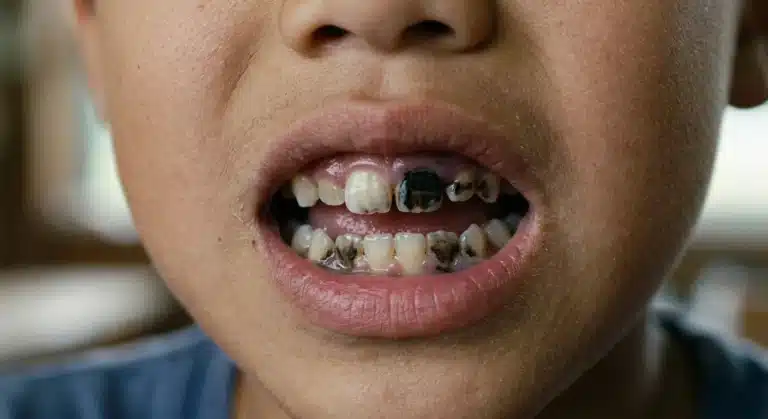
No, and this is true regardless of which toothbrush you use. Even careful brushing misses some plaque, and plaque left in place hardens into tartar (also called calculus) within days. Once it’s hardened, a toothbrush, electric or manual, can’t remove it. Tartar forms faster than most people expect, which is why it needs a dental instrument, not a brush, to take off.
That’s what professional scaling and polishing is for: it clears hardened tartar and surface stains that brushing alone can’t touch, at either end of the toothbrush spectrum.
If you’re a first-time patient, WeSmile Essentials, $98 nett for first-time patients, includes scaling and polishing, fluoride treatment and full mouth x-rays. See what’s included and how the pricing works. If you’re on CHAS, scaling and polishing is covered up to twice a calendar year, with the subsidy amount depending on your CHAS tier.
We see patients for this at our Ang Mo Kio, Bedok and Orchard clinics.
Should You Choose Manual, Electric, or Both?

There’s no single right answer, and both types can support good oral health when used correctly. Some patients find using both suits them better than picking one: electric for a more consistent daily clean, manual for travel or a gentler option at night. Alternating also stretches the life of electric brush heads.
What actually moves the needle is consistency, not the badge on the handle. Two minutes, twice a day, soft bristles, and regular professional cleaning to catch what brushing can’t.
FAQs
Is an electric toothbrush really more effective than a manual one at removing plaque?
Not necessarily, if technique is equal. NDCS research indicates manual and electric toothbrushes are equally effective at plaque removal when used correctly. Where electric brushes tend to help is consistency: built-in timers and pressure sensors make it easier to sustain good technique for the full two minutes without pressing too hard, which is why many dentists still recommend them to patients who struggle with manual technique.
How do I know if I’m brushing correctly with a manual toothbrush?
Brush for two minutes using gentle circular motions, not back-and-forth scrubbing, and use a soft-bristled brush. A consistent routine, paired with regular dental visits, is what protects your teeth and gums, not the type of brush.
Are electric toothbrushes worth the extra cost?
For some people, yes, particularly if you struggle to brush for the full two minutes or tend to brush too hard. If your technique is already solid and consistent, a manual toothbrush can do the same job for a fraction of the price.
Can an electric toothbrush damage my gums?
Used with too much pressure, yes, any toothbrush can. Many electric models include a pressure sensor that pauses the motor when you’re pressing too hard, which is a genuine advantage if you know you brush heavily. Choosing soft bristles helps regardless of which type you use.
If I use an electric toothbrush, do I still need scaling and polishing?
Yes. An electric toothbrush cleans more consistently, but it still can’t remove tartar once plaque has hardened. Professional scaling and polishing is what handles that, and it’s a separate step from daily brushing, not a replacement for it.
Whichever Toothbrush You Choose
The right toothbrush is the one you’ll actually use well, twice a day, for two minutes each time. Neither type replaces what a professional clean does.
Our dentists at WeSmile Dental see patients at Ang Mo Kio, Bedok and Orchard.