WSD Essentials (Scaling & Polishing, Fluoride Treatment, Full Mouth X-rays) at $98 nett. Learn more.
WeSmile Essentials (Scaling & Polishing, Fluoride Treatment, Full Mouth X-rays) at $98 nett. Learn more.
Last Updated:
Your gums do more than frame your teeth—they provide the essential foundation that holds your smile together. At WeSmile Dental, our gum disease treatment services help you address early signs of infection, halt progression, and rebuild lost support, all under one roof.
If you’re experiencing bleeding gums, persistent bad breath, or gum recession, don’t delay. Early intervention is critical to preventing long-term damage like tooth loss or bone deterioration.
Gum disease is a bacterial infection of the gums and the bone that holds your teeth. It is very common in Singapore: a national survey found 9 in 10 adults had some form of it. In its early stage (gingivitis) it can be reversed with professional cleaning and good brushing. Later stages (periodontitis) need deep cleaning below the gum line, and sometimes surgery. At WeSmile Dental, full mouth gum treatment is $1,308 (incl. GST). CHAS covers the consultation, scaling and polishing parts of treatment. Medisave can be used for some gum surgeries, but not for deep cleaning.

Gum disease (periodontal disease) is an infection of the gums and the bone that supports your teeth. It is caused by bacteria in plaque that builds up along the gum line.
It has two main forms:
Learn more about gingivitis and how to treat it.
Very common. According to the National Dental Centre Singapore, the 2019 National Adult Oral Health Survey of 1,196 adults found that 90% had some form of gum disease, and 57% had moderate to severe periodontitis. Because early gum disease is often painless, many people do not know they have it.
Regular check-ups help catch gum disease early. If your gums are swollen, see how to treat swollen gums.
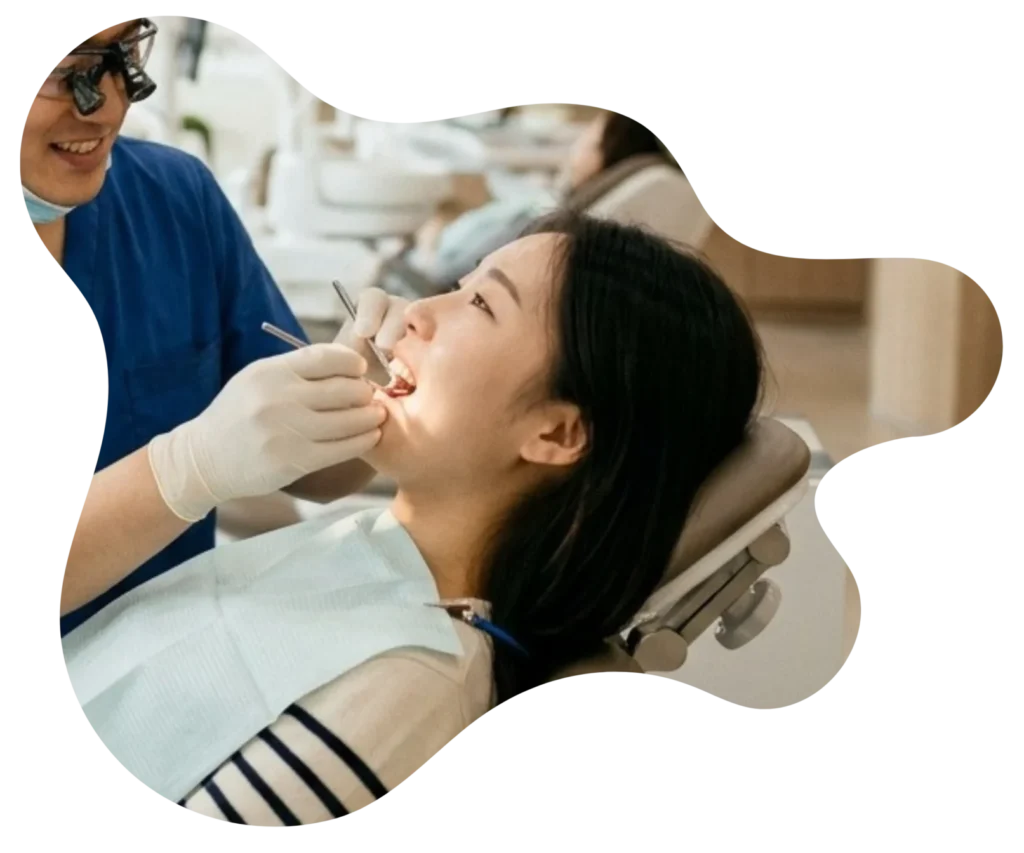
The main cause is plaque and tartar left on the teeth and along the gum line. Brushing alone cannot remove tartar once it hardens, which is why regular scaling & polishing matters.
Your risk is higher if you:
Yes. Dentists at the National Dental Centre Singapore note strong evidence that untreated severe periodontitis may worsen blood sugar control in people with diabetes. Severe periodontitis has also been associated with a higher risk of heart problems in people with heart disease. The link works both ways for diabetes: poorly controlled diabetes also raises the risk of gum disease.
If you have diabetes or heart disease, tell your dentist, and keep up with regular gum checks.

Gingivitis

Periodontitis

Advanced Periodontitis
Stage | What happens | Can it be reversed? | Usual treatment |
|---|---|---|---|
Gingivitis | Gums are red, swollen and bleed easily. No bone loss. | Yes | Scaling & polishing and better home care |
Periodontitis | Pockets form below the gum line. Bone starts to break down. | No, but it can be stopped | Deep cleaning (root planing) |
Advanced periodontitis | Severe bone loss. Teeth may become loose. | No, but it can be managed | Deep cleaning, gum surgery, or a referral to a gum specialist |
Treatment depends on how advanced the disease is. Most people start with non-surgical treatment.

Teeth Scaling and Polishing

Root Planing
For advanced gum disease, or when deep pockets remain after deep cleaning, your dentist may recommend:

Flap Surgery for Gum Treatment

Bone Graft for Gum & Bone Loss

Soft Tissue Graft for Receding Gums

Guided Tissue Regeneration (GTR) for Receding Gums

Bone Surgery
Scaling & polishing | Deep cleaning (root planing) | |
|---|---|---|
What it cleans | Tooth surfaces, along and just below the gum line | Deep below the gum line, including the tooth roots |
Who it is for | Everyone, as routine care, and people with gingivitis | People with periodontitis and deep gum pockets |
Anaesthetic | Usually not needed | Usually local anaesthetic |
Visits | Usually one | Often two to four |
Most gum disease, including deep cleaning, is treated by a general dentist. Your dentist may refer you to a periodontist (a gum specialist) if:
Specialist fees are usually higher than a general dentist’s.
The cost depends on how advanced the disease is and how many teeth need treatment. Typical prices at private clinics in Singapore in 2026:
Treatment | Typical price |
|---|---|
Deep cleaning (root planing), per quarter of the mouth, general dentist | About $200 to $350 |
Deep cleaning, per quarter of the mouth, gum specialist | About $400 to $600 |
Gum surgery (for example flap surgery or gum grafts) | About $550 to $2,000 or more |
Consultation and X-rays are usually charged separately.
| Service | Price (incl. GST) |
|---|---|
| Consultation | From $32.70 |
| Scaling & polishing | From $103.55 |
| Full mouth gum treatment | $1,308 |
Your dentist will explain the cost before treatment starts. See our full dental price list, or the scaling & polishing price guide for routine cleaning costs.
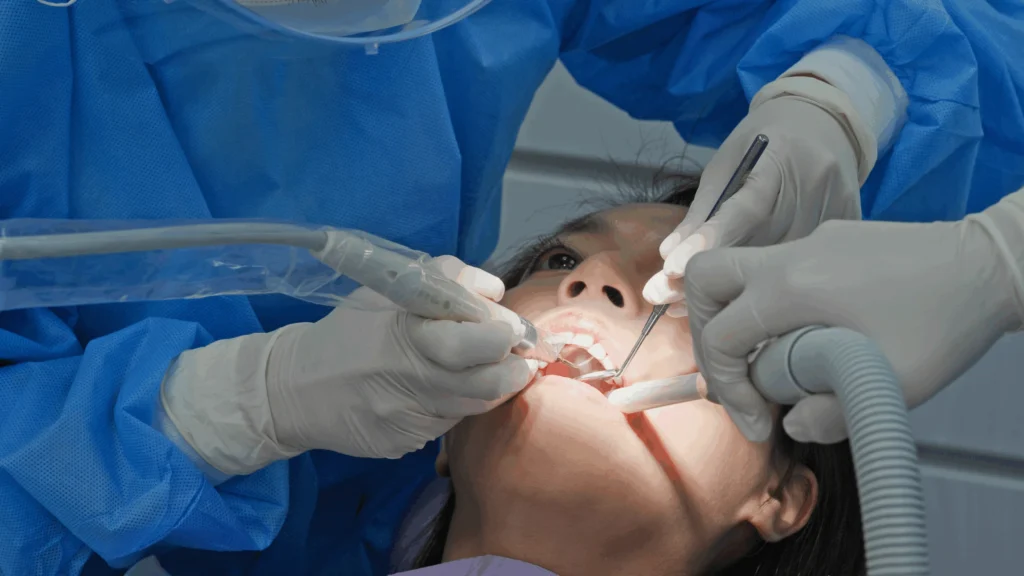
Deep cleaning and gum surgery are done under local anaesthetic, so you should not feel pain during treatment. Afterwards, your gums may feel tender or sensitive to cold for a few days. Your teeth may also feel slightly loose or look longer as swelling goes down. Contact your dentist if pain or swelling gets worse.
When | What to expect |
|---|---|
First 1 to 3 days | Gums feel tender. Teeth may be sensitive to cold. Eat soft food and brush gently. |
First week | Tenderness settles. Bleeding when brushing usually starts to reduce. |
6 to 8 weeks | Review visit. Your dentist re-measures your gum pockets to check healing. |
Ongoing | Cleaning every 3 to 6 months to keep gum disease from coming back. |
Recovery after gum surgery takes longer, and your dentist will give you specific aftercare instructions.
Early gum disease (gingivitis) can be reversed with professional cleaning and good brushing and flossing. Later gum disease (periodontitis) cannot be reversed, because lost bone does not grow back on its own. Treatment can stop it getting worse.
Gum disease is not contagious like a cold. The bacteria involved can pass through saliva, for example by sharing utensils, but whether someone develops gum disease depends mainly on their own oral hygiene and risk factors like smoking and diabetes.
No. Gums that have receded do not grow back on their own. Treating gum disease can stop further recession, and a gum graft can cover exposed roots in some cases.
Sometimes. If enough bone remains, treating the gum disease can help the teeth become firmer as the gums heal. Teeth with severe bone loss may need to be removed. Your dentist will check with X-rays.
Yes, once the numbness wears off. Choose soft food and avoid very hot, spicy or crunchy food for a day or two while your gums are tender.
Deep cleaning is often done over two to four visits, followed by a check around 6 to 8 weeks later. If surgery is needed, treatment can take several more weeks.
CHAS covers the consultation, scaling, polishing and X-ray parts of your visit. Deep cleaning (root planing) is not on the CHAS subsidy list.
Medisave can be used for some gum surgeries, depending on the procedure. It cannot be used for deep cleaning or routine scaling and polishing.
Bleeding or swollen gums? Book a gum check at our Ang Mo Kio, Bedok or Orchard clinic.