Published: 27 May 2025.
Last updated: 16 September 2026.
Written by: Dr Khoo Huan Ding, Aesthetic Dentist, WeSmile Dental.
Veneers fix a narrow set of problems very well: chips, gaps, discolouration that whitening can’t touch, teeth that are slightly the wrong shape or size, and teeth worn down by acid erosion, grinding, or age. They don’t fix bite problems, they don’t replace missing teeth, and they’re not reversible once ceramic is involved. If your concern is one of the first four and your teeth are otherwise healthy, veneers are usually worth a proper consultation. If it’s the last two, there’s almost always a better-suited treatment, and this guide will point you to it.
What are veneers?
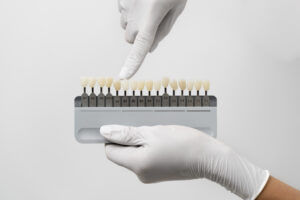
A veneer is a thin shell, usually ceramic or composite resin, bonded to the front surface of a tooth. It’s a cosmetic treatment, not a structural one: the tooth underneath still needs to be healthy, since a veneer sits on top of a problem rather than fixing it.
Ceramic and composite are the two materials in real use in Singapore. They differ in how they’re made, how long they last, and how much of your natural tooth they require. The comparison below covers the practical differences; both material pages (linked further down) go into pricing.
| Ceramic veneers | Composite veneers | |
|---|---|---|
| Made | In a dental lab, from an impression | Sculpted directly onto the tooth, chairside |
| Typical visits | 2 to 3 | Often 1 |
| Typical lifespan | 10 to 15 years | 5 to 7 years |
| Enamel removed | Yes, a thin layer | Minimal to none |
| Reversible | No | Largely yes |
| Stain resistance | High | Lower, more prone to discolouration over time |
Are you a good candidate for veneers?
Veneers work best on people who are already close to done, not people looking for a full smile overhaul. A dentist will typically want to confirm, before recommending veneers:
Your gums and teeth are free of active decay or gum disease. Veneers go on top of a tooth, they don’t treat what’s underneath it, so untreated decay or gum disease needs to be dealt with first, separately.
Your concern is cosmetic rather than structural. Discolouration that doesn’t respond to whitening, chips, small gaps, teeth that are slightly uneven in shape or length, or teeth worn down by frequent acid exposure (from reflux, bulimia, or an acidic diet), grinding, or natural aging are good fits. Misaligned bites, missing teeth, and teeth that are structurally compromised are not, veneers don’t correct those, and a dentist recommending veneers for a bite problem is a red flag worth a second opinion on.
You’re not a heavy smoker, or you’re willing to cut down. Ceramic resists staining well, but composite doesn’t, and smoking accelerates staining on both.
You brush and floss consistently already. A veneer doesn’t lower the bar on oral hygiene, if anything it raises it slightly, since the margin where the veneer meets the natural tooth is a spot plaque can collect.
You understand ceramic veneers are a one-way decision. Once enamel is removed to fit a ceramic veneer, that tooth needs some form of veneer or crown permanently, a point the American Dental Association makes plainly in its own patient guidance. That’s not a downside to hide, it’s the single most important thing to know before booking a consultation.
Once enamel is removed to fit a ceramic veneer, that tooth will need some form of veneer or crown for the rest of its life. It’s the one fact worth understanding before you commit, not after.
Does getting veneers hurt?
Most patients describe some pressure during enamel preparation and mild sensitivity for a day or two afterward, not pain. Local anaesthetic is available if you’d prefer it, and most patients who choose ceramic use it during the preparation appointment. Composite veneers, since they usually need no enamel removal, are typically more comfortable start to finish.
Sensitivity to hot or cold in the first week is common and expected. It should ease off on its own; if it doesn’t within a couple of weeks, that’s worth flagging to your dentist rather than waiting it out.
Veneers vs other cosmetic dentistry options: when is a different fix the better call?
Veneers get recommended often because they’re visible and dramatic, but they’re not always the right tool.
If your only issue is colour, professional teeth whitening solves it without touching your enamel and costs a fraction as much. Veneers are a heavier intervention than most colour-only concerns need.
If your teeth are crowded, rotated, or your bite is off, that’s an orthodontic problem (braces or Invisalign), not a cosmetic one. Veneers placed over misaligned teeth can look fine initially but don’t correct the underlying bite, and can make orthodontic treatment more complicated later if you change your mind.
If you have a single chipped or slightly uneven tooth, composite bonding is often enough, it’s reversible, cheaper, and usually done in one visit. Veneers are the better call once you’re addressing several teeth at once for a consistent, uniform look, or where bonding alone won’t hold up.
If a tooth is decayed, cracked below the gumline, or has had root canal treatment, a crown is usually the more appropriate fix, it covers the whole tooth rather than just the front surface.
What can’t veneers fix?
Worth saying plainly, since most pages selling veneers don’t. Veneers won’t fix a misaligned bite. They won’t replace a missing tooth, that’s an implant or bridge. They won’t stop gum disease or decay, those need to be treated first and separately. And they won’t hold up on a tooth with heavy grinding (bruxism) left unmanaged, grinding can chip or dislodge a veneer the same way it damages natural enamel, so a night guard is usually part of the plan if you grind your teeth.
If any of those describe your situation, a consultation is still the right first step, just to be told honestly that veneers aren’t it and to be pointed at what is.
What’s the process of getting veneers at WeSmile?
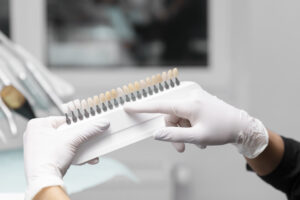
- Smile assessment. Your dentist examines your teeth and gums, discusses what you want to change, and confirms whether veneers (and which material) fit your case.
- Tooth preparation. For ceramic, a thin layer of enamel is removed to make room for the veneer. Composite usually skips this step.
- Impressions (ceramic only). A mould of your prepared teeth is sent to a dental lab, which typically takes one to two weeks to fabricate the veneers.
- Temporary veneers (ceramic only). Worn while you wait for the permanent set, so you’re not walking around with prepared teeth exposed.
- Bonding and finishing. The final veneers are checked for fit, colour, and bite before being permanently bonded, then polished.
Composite veneers are often completed in a single visit, since there’s no lab step. Ceramic typically takes two to three visits across one to two weeks.
Meet your cosmetic dentist: Dr Khoo Huan Ding

Dr Khoo holds a Masters in Aesthetic Dentistry from King’s College London and has practised in the UK, Hong Kong, and Singapore. Her approach to veneer cases is minimally invasive by default, removing less enamel where the case allows it, rather than defaulting to the maximum-prep ceramic approach. She sees patients mainly at our Orchard clinic, with some sessions at Bedok.
How do you care for veneers after they’re placed?
Brush and floss as you normally would, veneers don’t need special products, but the gumline where the veneer meets your natural tooth deserves the same attention as any other tooth margin. A soft-bristled brush is enough.
Avoid biting directly into very hard foods (ice, hard candy, unshelled nuts) with veneered teeth, the same way you’d protect a natural tooth from a chip. If you grind your teeth at night, wear a night guard, this is the single most common cause of early veneer damage.
Coffee, tea, and red wine will stain composite veneers over time the same way they’d stain natural enamel. Ceramic resists this far better. If staining is a top priority for you, weigh it alongside cost when choosing between the two materials.
Keep up your regular scaling and polishing visits. A professional clean removes surface buildup that home brushing can miss, without affecting the veneer itself. If it’s been a while since your last one, WeSmile Essentials is $98 nett for first-time patients and covers scaling and polishing, fluoride treatment and full mouth x-rays.
What does it cost, and where do I check current pricing?
Cost depends on the material, how many teeth you’re treating, and your specific case, which is why we’ve kept the actual price lists on their own pages rather than repeating them here.
- Composite veneers: see Teeth Veneers Cost in Singapore for current per-tooth pricing and what’s included.
- Ceramic veneers: see Ceramic Veneers Cost Singapore for current per-tooth pricing and material options.
A consultation is the only way to get a number specific to your teeth, since the right material and the number of teeth involved both move the total.
Is it worth it?
That depends on what you’re solving for. If whitening, bonding, or orthodontics would fix your actual concern, veneers are usually more treatment than you need. If your concern is one veneers are built for, discolouration whitening won’t touch, chips, gaps, uneven shape, or wear from grinding or acid erosion, and you’re comfortable with the one-way nature of the ceramic option, that’s the scenario veneers are designed to solve well.
The honest next step either way is a consultation, not a purchase decision made from a blog post. Book one at Ang Mo Kio, Bedok, or Orchard, and you’ll walk out knowing whether veneers are actually the right fix for your teeth, or whether something simpler will do.
Frequently asked questions
Are veneers permanent?
Ceramic veneers are considered a permanent commitment because enamel is removed to fit them, the tooth will need some form of veneer or crown from that point forward. They typically need replacing after 10 to 15 years. Composite veneers are largely reversible and typically last 5 to 7 years.
Can I get veneers on my bottom teeth?
Yes. Composite veneers are commonly used on lower teeth as a more cost-effective option than a full ceramic set.
Do veneers look natural?
They’re custom-made to match the colour, size, and shape of your surrounding teeth, so a well-fitted veneer shouldn’t be obvious as one. Fit and shade-matching are where the dentist’s skill matters most.
Will veneers affect my speech or eating?
Most patients notice a short adjustment period, typically a few days, and report no lasting effect on speech or eating afterward.
Can veneers be removed or replaced later?
Composite veneers can be removed relatively easily. Ceramic veneers can be replaced when they wear out, but the underlying tooth has already had enamel removed, so “removal” isn’t a return to your natural, untouched tooth.