
Published on: 18 September 2026
After a tooth extraction, what you eat has a direct effect on how comfortably and quickly you heal. The extraction site depends on an undisturbed blood clot to protect the bone and nerve tissue underneath it, and eating the wrong foods too soon is one of the most common causes of dry socket (alveolar osteitis) and delayed healing. This guide sets out a clinically informed, week-by-week eating plan, with practical Singapore hawker food swaps, to help you recover safely.
For general aftercare beyond diet, see our post-extraction care guide.
Key Takeaways
- Eat soft, cold foods for the first 1-2 days, then move to semi-solid foods from day 4, and normal-textured meals by weeks 2-3.
- Avoid hard, sticky, hot, acidic, and spicy foods, plus straws and smoking, as these can dislodge the healing blood clot.
- Protein, calcium, and hydration support faster socket healing, according to recent oral surgery research.
- Severe pain on days 3 to 5, or worsening fever and swelling, may signal dry socket or infection and need prompt dental attention.
- Recovery timelines vary by patient, so always follow your dentist’s specific aftercare instructions.
What to Eat in the First 24 to 48 Hours
The blood clot that forms in the socket immediately after extraction is essential to healing and must stay undisturbed during this window.
Good choices include ice cream, yoghurt, and soft tofu, which are gentle on the extraction site while still providing nutrition. Protein smoothies blend easily and deliver nutrients without requiring any chewing. Soft congee and porridge work well for most Singapore patients, since they are already familiar comfort foods. Cold fluids such as milk and water can also help reduce swelling.
Skip the straw for now (more on why below) and stick to sipping directly from a cup.

Recovery Timeline: Week by Week
Healing after a tooth extraction takes time, but your diet can expand as your mouth heals. Here is what to expect and eat as you transition safely back to solid foods.
Days 4 to 7: Early Recovery
By day four, the clot has begun to stabilise, so you can start introducing semi-solid foods: soft cooked rice with mild curry, steamed fish that flakes easily, and noodles in broth. Continue with protein sources such as eggs and soft tofu, and add mashed vegetables like pumpkin and sweet potato for their healing-supportive vitamins.
Week 2: Moderate Recovery
Well-cooked chicken rice, soft laksa with tender noodles, and minced meat curry can now be added back in, along with mild curries generally. The site is still healing, so continue to avoid anything that needs forceful chewing, and keep up calcium-rich foods such as yoghurt and soft cheese to support bone healing.
Week 3 and Beyond: Back to Normal
Most patients can return to their normal diet by week three to four. If you still feel discomfort, stay with softer options a little longer, and continue chewing on the opposite side from the extraction site until it is fully healed.
Why Nutrition Matters for Healing
Dietary protein supplies the amino acids needed for collagen synthesis and tissue regeneration during early recovery. A 2025 pilot study of patients recovering from impacted wisdom tooth removal found that those with higher protein intake reported significantly less pain on the first day after surgery and had better wound healing scores by day seven, supporting the case for protein-rich soft foods in the days after extraction (Avağ et al., 2025, BMC Oral Health).
Calcium and vitamin D work together to support bone healing in the socket, while adequate hydration helps maintain the saliva production and general physiological function that wound closure depends on (Rybowski et al., 2025, Quality in Sport). For patients later considering tooth replacement, good nutrition during recovery also helps preserve the jawbone density that dental implants rely on for successful integration.
Foods to Avoid, and Why They Risk Dry Socket
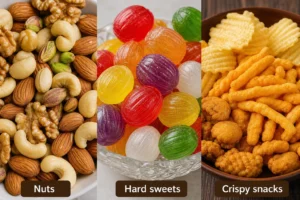
Hard foods such as nuts, hard sweets, and crispy items can dislodge the blood clot. Sticky foods including bak kwa, caramel, and chewing gum pose a similar risk by tugging at the socket. Hot beverages should be avoided for the first 24 hours, since heat raises blood pressure and can disturb the clot; after that, keep drinks lukewarm and avoid coffee and tea entirely for about a week, as their acidity can irritate the site. Acidic and very spicy foods can inflame the socket and are best avoided for at least a week.
Straws and smoking both create suction that can pull the clot loose, so avoid them for at least a week, and limit strenuous physical activity during the first few days as well.
When the clot dislodges prematurely, it leaves bone exposed, a painful complication called dry socket. It typically appears on days three to five after extraction. If severe pain develops in that window, or if you notice a foul taste or odour, contact your dentist promptly rather than waiting it out.
Singapore Hawker Food Guide
Popular Singapore breakfast items require careful consideration during recovery:
Safe choices: very soft chicken rice, congee with egg, tau huey, soft fish soup, and steamed tau kwa all provide good nutrition without stressing the extraction site.
Foods to avoid: bak kwa, char kway teow, fried chicken, and crispy roti prata all require forceful chewing that risks complications.
A local tip: kopi and teh tarik are quite acidic, so if you do have one, wait at least 30 to 45 minutes before brushing your teeth to avoid brushing acid into softened enamel near the site.
Medication and Food Interactions
Take prescribed antibiotics with soft food to reduce stomach upset, but avoid taking them within an hour of dairy products, as this can reduce their effectiveness. Pain medication should also be taken with food. If your prescribed pain relief isn’t managing your discomfort, consult your dentist rather than self-prescribing additional medication.
When to Seek Immediate Dental Care
Contact your dentist promptly if you notice severe pain beyond the first day, a fever above 38.5°C, swelling that is still increasing by day three, pus or discharge from the site, or difficulty swallowing, as these can indicate infection. Seek emergency care immediately for difficulty breathing or bleeding that hasn’t settled after 24 hours.
Special Circumstances
Impacted wisdom tooth extractions generally need a longer soft-diet period, typically four to six weeks rather than three to four. Patients on blood thinners should discuss their diet and medication with their dentist before the extraction. Vegetarian and vegan patients can meet protein needs through soft lentil dhal, tofu, fortified plant milks, and nutritional yeast. If religious fasting falls during your recovery window, talk to your dentist about the best timing for your extraction.
Frequently Asked Questions About Extraction Recovery Foods
Can I eat rice after tooth extraction?
Yes, from around day four, provided it’s cooked very soft and mixed with broth or a mild gravy so it needs minimal chewing. Avoid rice with tough or burnt grains in the meantime.
Is ice cream safe after tooth extraction?
Yes, it’s one of the better early choices: the cold helps with swelling, the texture needs no chewing, and it offers some calcium. Stick to plain flavours without nuts or biscuit pieces.
When can I have coffee or tea after extraction?
Wait at least 24 hours, then only lukewarm, and ideally hold off on coffee and tea entirely for about a week given their acidity. When you do resume, keep it lukewarm rather than hot.
Can I eat spicy food after extraction?
Avoid spicy food for at least the first two weeks, as chilli and pepper can irritate the site. A mild curry is usually fine from week two onwards if the spice level is kept low.
Is alcohol OK after tooth extraction?
Avoid it for at least a week. Alcohol thins the blood, raising bleeding risk, and can interact with pain medication. After that, keep it moderate and never combine it with pain relief.
Ready to Heal Properly? Book Your Consultation Today
If you’re facing a tooth extraction, or dealing with discomfort after one, the right guidance can be the difference between a smooth recovery and a painful complication like dry socket. WeSmile Dental’s team provides comprehensive extraction care, recovery support, and personalised dietary guidance to help you heal well. Schedule a consultation with our Singapore dental team today.