
Dental Retainers Singapore: A Guide to Types, Costs & Care

You have finally completed your orthodontic treatment and your braces are off—but keeping your teeth straight requires ongoing care. Dental retainers play a crucial role in preventing your teeth from shifting back to their original positions after braces. In this guide, we explain what dental retainers are, why wearing them consistently matters, the types available in Singapore, and how much they typically cost.

What are dental retainers?

Dental retainers are custom-made orthodontic appliances designed to hold your teeth in their new positions after active treatment. They act as a stabilising force, ensuring that the bone and gums around your teeth have time to adapt to their new alignment. These devices can be either removable or fixed, depending on your clinical needs and lifestyle preferences.

Why is it important to wear retainers after braces?

Teeth are held in place by fibres rather than being fixed directly into the bone. When braces are removed, these fibres can pull teeth back to where they used to be. Without a retainer, your teeth can shift out of alignment in only a few weeks.

Why Retainers are Essential After Your Orthodontic Treatment

Teeth are not fixed in bone like nails in a plank of wood. They are actually held in place by a complex system of fibres. When orthodontic pressure is removed, these fibres may pull the teeth back toward their original, crooked positions. Without a retainer to hold them in place, the work of several years can begin to undo itself in just a few weeks.

Understanding Relapse: Why Teeth Move After Braces

The periodontal ligaments surrounding your teeth have a peculiar type of elastic memory. During your treatment, these ligaments were stretched or compressed. Once the braces are removed, they essentially try to snap back to their previous state. This process is known as relapse. It appears that the first few months after treatment are the most critical, as the bone around the new tooth positions has not yet fully hardened or calcified.

The Role of Retainers in Long-Term Smile Alignment

Think of a retainer as an insurance policy for your smile. You have spent considerable time and resources to achieve alignment, and the appliance acts as a physical barrier against natural shifting. It is likely that age also plays a role in tooth movement. As we get older, our teeth naturally tend to drift forward. Wearing a retainer helps to counteract both orthodontic relapse and the natural changes that occur with ageing.

How Long Must You Wear Your Retainers?

Most dentists say you need to use your retainer forever to keep your teeth straight. You usually wear it all day for the first few months, then switch to wearing it only at night. If you stop using it, your teeth will eventually move back, but some people’s teeth move faster than others.

What Happens If You Don’t Wear Your Retainer Consistently?

If you do not wear your retainer as instructed, your teeth may gradually shift back toward their previous positions. In some cases, noticeable movement can occur within a few months. The longer retainers are not worn, the higher the likelihood that teeth will relapse permanently. Minor movement may be managed with a replacement retainer, but more significant shifting often requires additional orthodontic treatment. This is why dentists commonly advise lifelong retainer wear—typically full-time initially, followed by nightly wear long-term.

Comparing the Types of Retainers Available in Singapore

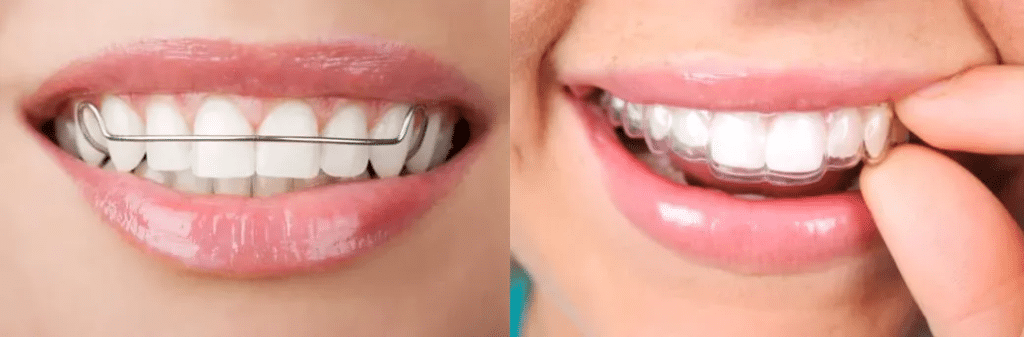
Learn about the three main varieties of retainers used in Singapore, from clear removable options to permanent wires hidden behind your teeth. Your choice often depends on your lifestyle, how likely you are to remember to wear it, and your aesthetic preferences. Here is a breakdown of the common options:

✅ Clear Plastic: Discreet and popular.
✅ Wire and Acrylic: Durable and adjustable.
✅ Fixed Wires: Permanent and hidden.
Dental Retainers Singapore
Retainer TypeVisibilityDurabilityBest For
Clear PlasticInvisibleLow–MediumAesthetic-focused adults
Wire & AcrylicVisibleHighLong-term durability
Fixed WireHiddenVery HighForgetful patients

Clear Plastic Retainers

These are very popular in Singapore because they are nearly invisible. They are made from a thin, medical-grade plastic that fits snugly over your teeth. Because they cover the entire biting surface, they are excellent at preventing small movements. Some patients find them very comfortable for daily wear. However, they can warp if exposed to heat, and they may need replacement more frequently than other types.

Traditional Wire and Acrylic Retainers

This style consists of a plastic base that fits against the roof of your mouth or behind your lower teeth, with a metal wire that runs across the front. They are quite sturdy and can last for many years if handled with care. One interesting benefit is that a dentist can often tweak the wire to close small gaps if they appear. They are more noticeable than clear versions, but many people appreciate their longevity.

Fixed Permanent Retainers

A fixed retainer involves a thin wire bonded to the back of your front teeth. Since it is glued in place, you do not have to worry about forgetting to wear it. It provides constant support, which is particularly helpful if your teeth were very crowded before treatment. The trade-off is that flossing becomes a bit more complicated, and you must be diligent with your hygiene to prevent plaque buildup around the wire.
happy-teeth-a

Potential Risks and Limitations of Dental Retainers

While retainers are essential, they are not without certain risks and biological limitations. The success of the retention phase depends heavily on both the patient’s commitment and the physical properties of the chosen retainer.

The Biological Risk of Orthodontic Relapse

The primary risk is relapse. If you stop wearing a retainer, your teeth will likely begin to drift back to their old positions. This can happen quite rapidly in the first few months. Even with a fixed retainer, there is a small risk that the bonding material may fail or the wire may bend under the pressure of a hard bite, allowing a tooth to move out of alignment without you noticing.

Oral Hygiene Challenges and Periodontal Health

Fixed retainers, in particular, may lead to an increased accumulation of plaque and tartar (calculus) because they make traditional flossing more difficult. If not cleaned meticulously with specialised tools like floss threaders or water flossers, this buildup can contribute to gum inflammation or even localised tooth decay. Removable plastic retainers also carry a risk of trapping bacteria against the teeth if they are not cleaned daily.
happy-teeth-a

Limitations in Altering Tooth Position

It is important to remember that a retainer is a passive device. Its job is to maintain the current position, not to move teeth. If your teeth have already shifted significantly, a standard retainer cannot push them back into place. In such cases, a more active orthodontic intervention might be necessary. Furthermore, retainers have a limited lifespan; clear plastic versions, for example, are prone to wear and tear and may need frequent replacement to remain effective.

How Much Do Retainers Cost in Singapore?

Costs in Singapore can vary based on the material used and whether you need a single arch or a full set. Below is a guide to the typical fees you might encounter at WeSmile Dental.

Frequently Asked Questions About Retainers

Can I use my old retainer to move my teeth back?

It is generally not recommended. If your teeth have moved, forcing an old, tight retainer over them can cause root damage or gum recession. If the movement is minor, a new retainer may be made to hold the current position. For larger shifts, you might need a brief period of active treatment.

Can I get retainers without having had braces before?

Actually, yes. Some people choose to wear a retainer to prevent the natural forward drifting of teeth that happens as we age, even if they never had braces. However, a retainer cannot straighten crooked teeth; it can only hold them where they currently are.

How often should I see a dentist for a retainer check?

It is a good idea to bring your retainer along to your regular six-monthly cleaning and check-up. Your dentist can inspect the appliance for cracks and check that your teeth are not showing signs of movement. This allows us to catch small issues before they require expensive corrections.

Book a Retainer Consultation at WeSmile Dental

Maintaining the results of orthodontic treatment requires the right retainer and professional follow-up. At WeSmile Dental, we provide custom-fitted retainers tailored to your bite, lifestyle, and long-term oral health needs.

Whether you need a replacement retainer, are considering a fixed retainer, or want advice on preventing relapse, our dentists can assess your situation and recommend the most suitable option.