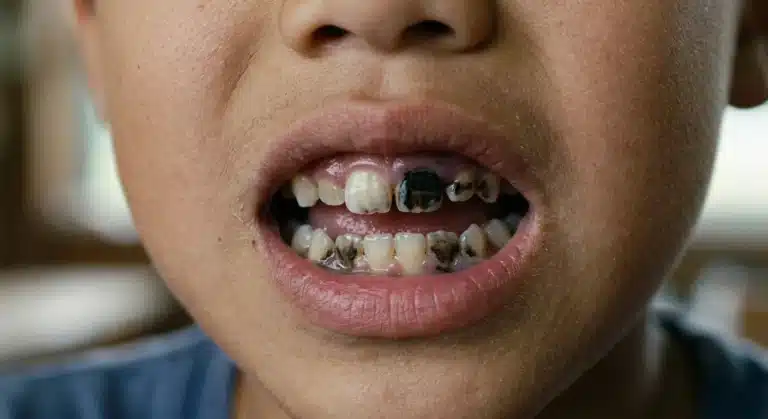
Ever caught yourself covering your mouth when talking to a colleague? Bad breath feels like a deeply personal hygiene failure, but it rarely is. It appears to be a highly treatable clinical condition. Through routine preventative care like our scaling and polishing services, we help you eliminate plaque buildup, address root causes of your symptoms, and find lasting solutions for halitosis in Singapore.
What is Halitosis and Why Does It Affect So Many in Singapore?
Halitosis is chronic bad breath primarily caused by an overgrowth of oral bacteria and a chemical imbalance in the mouth, rather than just poor brushing habits. In Singapore, this condition is widespread due to a perfect storm of local lifestyle factors, including high-stress levels, insufficient daily water intake, and a diet rich in strong, flavourful local spices. These everyday habits dry out the mouth and alter oral chemistry, allowing odour-causing bacteria to thrive despite regular brushing.
Understanding the “1 in 4” Statistic in Singapore
Singapore’s hot weather and high stress lifestyles often lead to chronic dehydration. Constant coffee or tea consumption makes this even worse. This dry environment allows volatile sulfur compounds (VSCs) to multiply rapidly. These gases are the true culprits behind the smell. When your mouth lacks moisture, a review on the pathophysiology of halitosis shows that these bacteria thrive unchecked.
The Oral Origins: Where the Smell Actually Comes From
According to a multidisciplinary study on halitosis origins, 85% of bad breath cases start right in the mouth. Anaerobic bacteria feed on trapped food particles, dead cells, and debris left behind after meals. As they digest this material, they release foul smelling gases. Think of it like a tiny compost bin acting up. The smell is simply a byproduct of bacteria doing their normal job in an oxygen deprived space.
Distinguishing Between Morning Breath and Chronic Halitosis
While waking up with a stale taste in your mouth is incredibly common, it is important to know when it is just a normal part of your morning routine versus a sign of a deeper issue.
Here is a quick look at the key differences between temporary morning breath and chronic halitosis:
| Feature | Morning Breath | Chronic Halitosis |
|---|---|---|
| Duration | Temporary; occurs typically upon waking. | Persistent; lasts throughout the day. |
| Response to Hygiene | Clears up quickly with water, brushing, or flossing. | Returns shortly (e.g., within an hour) after thorough cleaning. |
| Treatment | Solved with standard daily home care. | Requires clinical intervention to resolve fully. |
The Top Dental Causes of Bad Breath in Singapore
Untreated dental conditions are the primary drivers of Halitosis Singapore cases. Here are the main culprits, from hidden gum infections to climate induced dry mouth. We highlight why professional cleanings are a medical necessity.

Gum Disease (Periodontitis): The Silent, Foul Culprit
Bacteria love to hide deep inside gum pockets where standard toothbrushes absolutely cannot reach. As this infection grows under the gum line, it emits a distinct and chronic odour. Many patients do not even realise they have gum disease until the smell becomes noticeable to others.
Dry Mouth (Xerostomia) Exacerbated by Climate and Diet
Without enough saliva, bacteria do not get washed away naturally. Sleeping in air conditioned rooms all night dries out your oral tissues. Eating pungent local foods like durian, garlic, or sambal often worsens dry mouth induced halitosis. Saliva is your natural defence mechanism. When it drops, the bad bacteria take over completely.
Tooth Decay and Failing Restorations
Deep cavities and cracked fillings act as physical traps for rotting food. A toothbrush simply cannot clean out a deep hole in your molar. When decay reaches the nerve, the smell becomes severe. Old dental work that no longer fits well can also harbour these hidden bacterial colonies.
How Much Does Bad Breath Treatment Cost in Singapore?
Cost is a common concern when seeking treatment for Halitosis Singapore clinics provide. Let us break down the transparent pricing and available government subsidies that make professional care accessible.
Transparent Pricing for Fresh Breath Consultations
A standard consultation ranges from $32.70 to $80.00, depending on the duration and clinical complexity. Ignoring the problem often leads to complex gum surgery, which is far more expensive than a routine deep dental cleaning.
| Treatment Level | Purpose | Cost Impact |
|---|---|---|
| Standard Consultation | Identify the exact root cause | Low baseline fee |
| Scaling & Polishing | Remove hardened tartar fortress | Highly affordable |
| Advanced Gum Surgery | Treat neglected, deep infection | High financial cost |
Utilising CHAS, Merdeka, and Pioneer Generation Subsidies
Patients in Singapore can heavily subsidise their treatments. Using CHAS cards or Senior Generation benefits at WeSmile Dental helps manage the costs of treating halitosis and underlying gum issues. We guide you through the claims process so you understand exactly what you are paying out of pocket before any treatment begins.
Frequently Asked Questions About Halitosis
Can I smell my own halitosis?
No, you generally cannot smell your own halitosis due to olfactory fatigue, an evolutionary quirk where your brain tunes out your own constant scent. To accurately check your breath at home, you can use the wrist lick test (lick your wrist, let it dry for a few seconds, and smell it) or the floss test to get a reliable indicator of your breath’s actual odour.
Is gum disease common in Singapore?
Yes, clinical data indicates a high prevalence of periodontal issues among the local adult population. According to a commentary hosted by the National Dental Centre Singapore, significant gaps in routine preventive care contribute to untreated dental issues across various age groups.
This prevalence directly correlates with the frequency of chronic bad breath, as untreated gum inflammation allows odour-causing oral bacteria to multiply. This is often driven by a combination of lifestyle habits, high stress levels, and a tendency among residents to skip regular dental checkups until symptoms become severe.
Should a dentist be my first point of contact for bad breath?
Yes. Peer-reviewed clinical studies, including data published in the Journal of Clinical Periodontology, confirm that approximately 85% to 90% of halitosis cases originate entirely within the mouth, typically due to oral bacteria breakdown. Because of this high statistical probability, an initial dental examination is the recommended first step.
If a comprehensive evaluation completely rules out intra-oral causes, patients are referred to appropriate medical specialists. For instance, an Ear, Nose, and Throat (ENT) specialist may be required to address tonsil stones or chronic sinusitis, while a Gastroenterologist may be consulted if the symptoms are linked to gastrointestinal conditions like acid reflux.
Ready to Reclaim Your Confidence?
Persistent bad breath is not something you have to live with, and it is not something you can mask with mints. At WeSmile Dental Singapore, we identify the exact bacterial root cause of your halitosis to provide gentle and thorough treatments that give you lasting fresh breath.
Don’t let halitosis affect your social life, career, or self-esteem any longer. Take the first step toward a cleaner, healthier mouth today. Book a consultation.